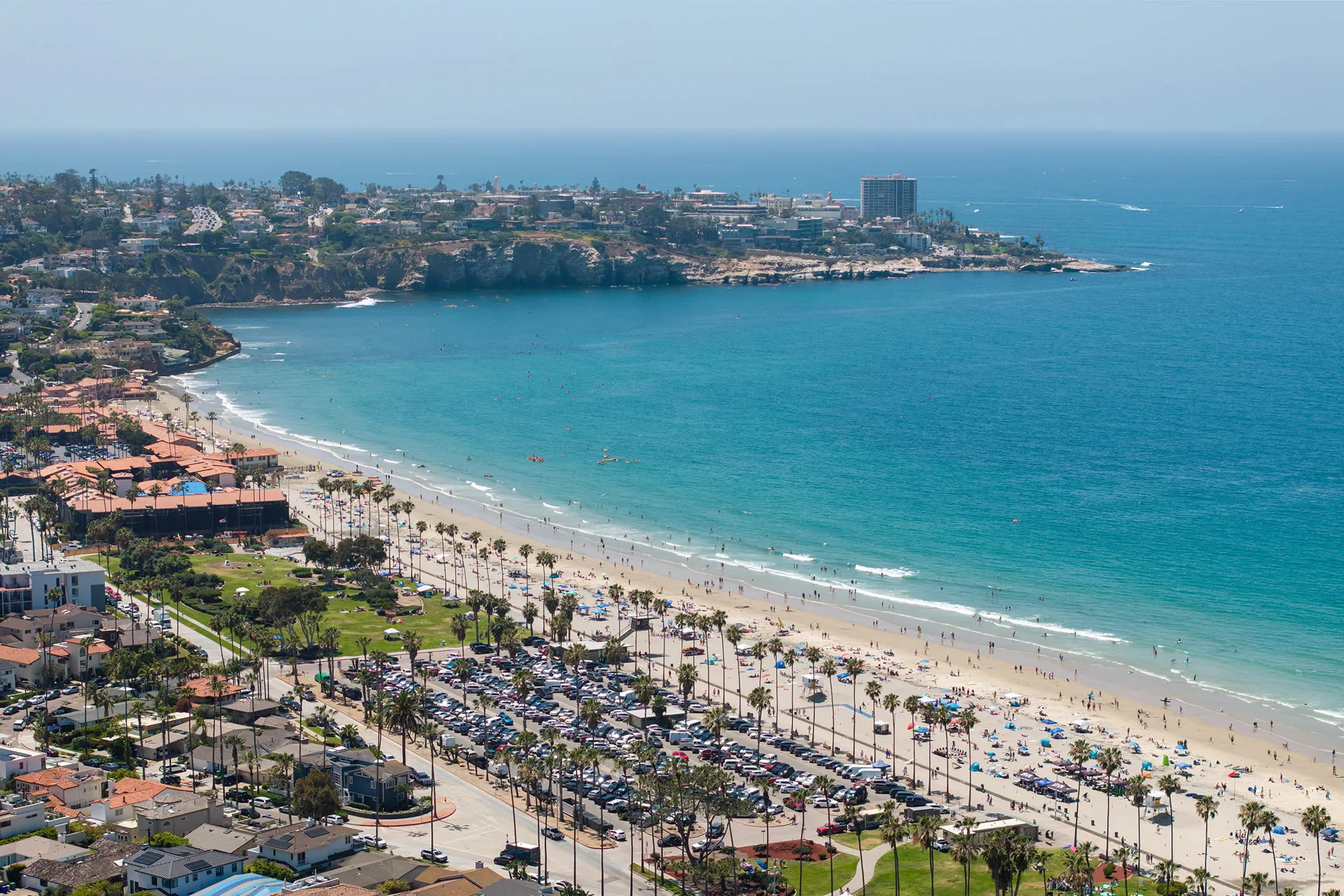
Donated 80 years ago and dedicated 75 years ago, Kellogg Park in La Jolla Shores exemplifies how deed restrictions encourage community access and celebration.
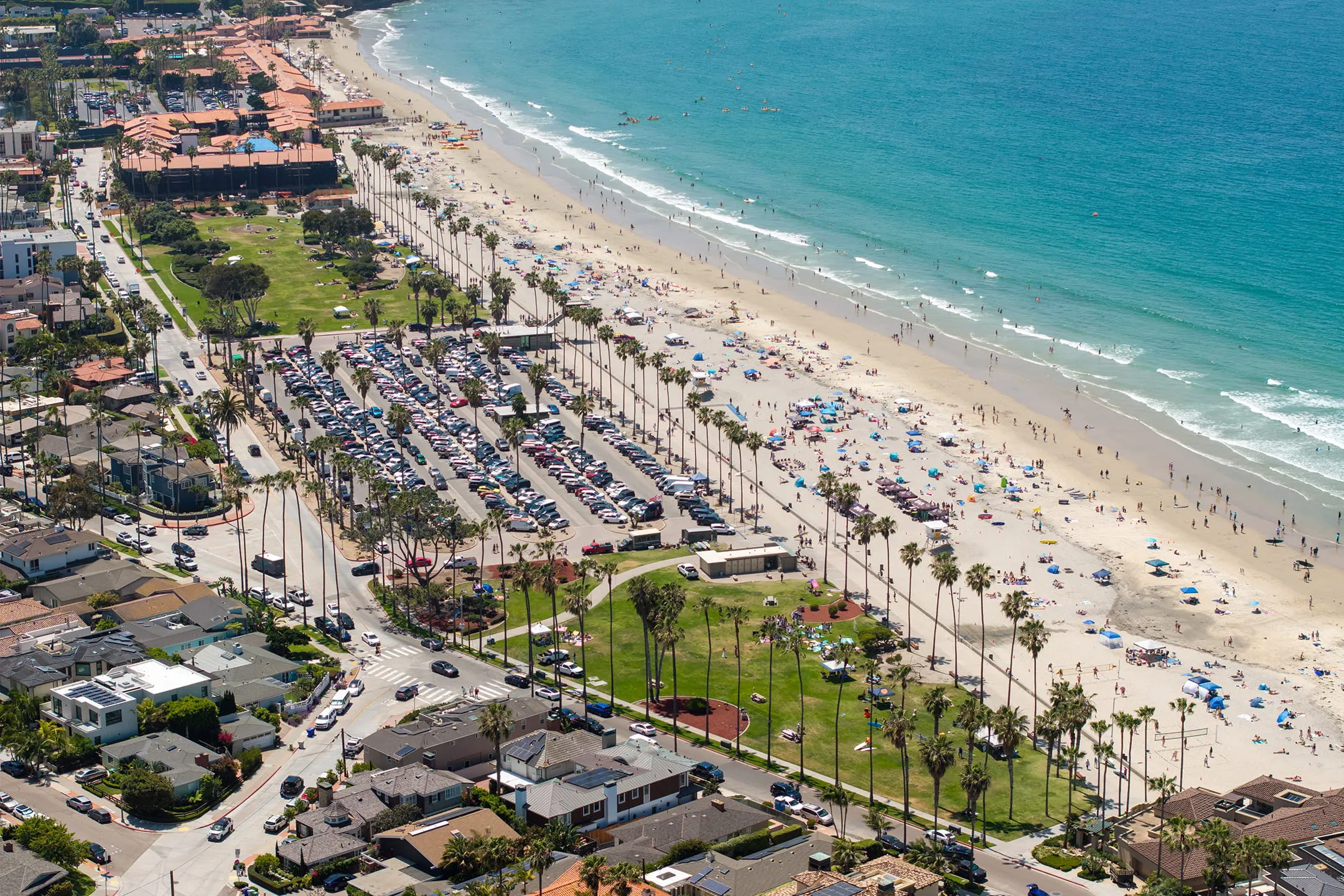
For 75 years, Kellogg Park has been the recreational headquarters for La Jolla Shores, its oceanfront, grassy expanse providing ample open space for family picnics, sporting, community and private events and more, right next to the sand.
Arrive early in the morning, and you’ll find surfers waxing boards on the grass and ocean tour guides preparing for group lessons. As the day progresses, families arrive with children beelining for the shaded playground, runners start and end their workouts and people find places to sit, read, relax and enjoy their surroundings.
Kellogg Park is lined on the west by the La Jolla Shores boardwalk and divided by a large parking lot into two sections, each with a comfort station containing restrooms and showers.

The southern portion boasts “The Map,” a massive 2,200-square-foot outdoor educational mosaic embedded in the ground near the boardwalk. Created by the Walter Munk Foundation, this detailed lithocrete installation depicts the local underwater canyons, marine life and coastal topography.
Picnic tables and benches abound throughout Kellogg Park and each of the massive grassy areas are flanked by palm trees, flowering hedges, shrubs, cypress trees and more.
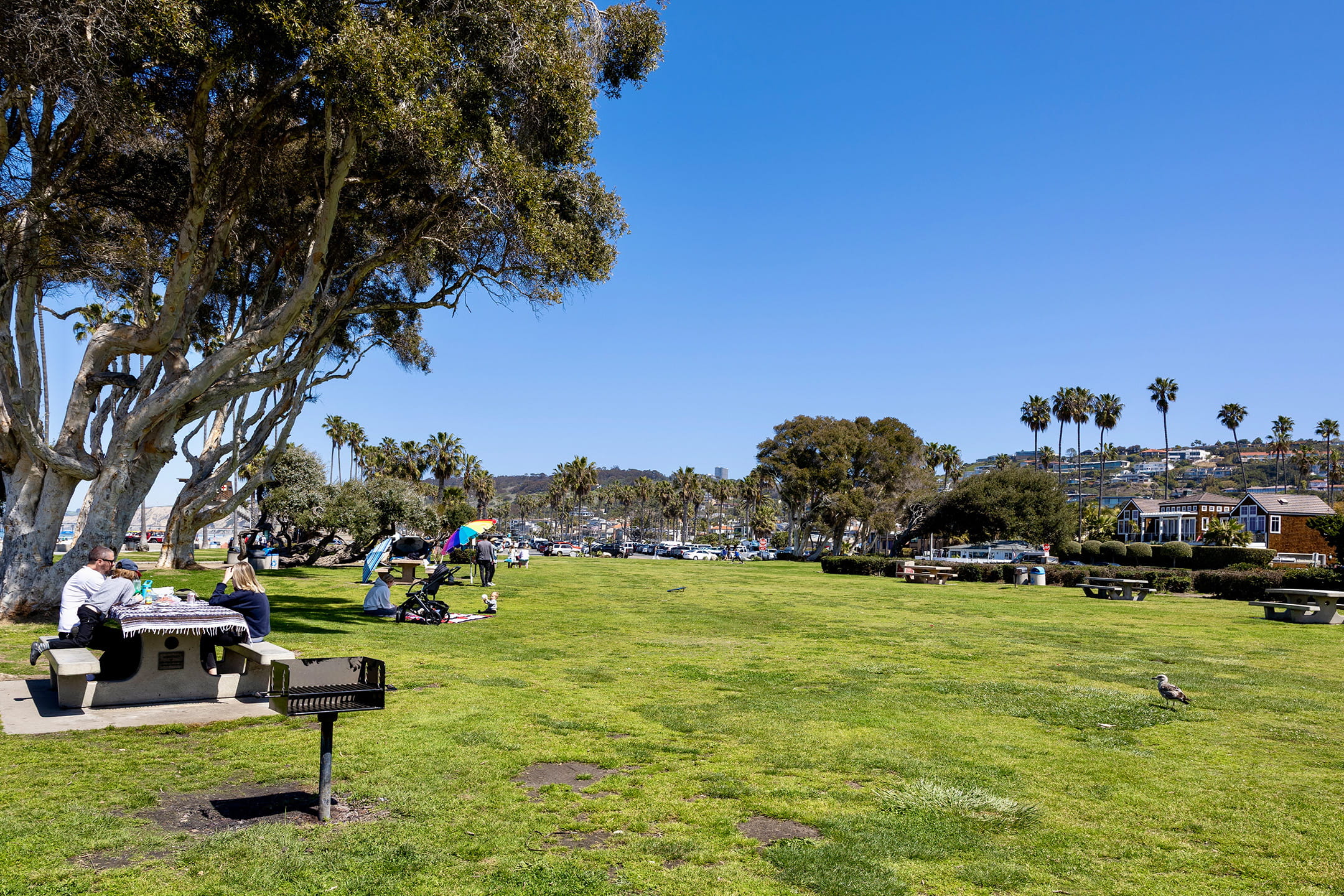
The landscaping is deliberate, a condition of the park’s creation and one of the ways in which the restrictions that accompanied Kellogg Park’s founding have allowed the park to thrive as a community center and welcoming beach access point.
A family legacy
Kellogg Park’s roots are firmly tied to the Kellogg and Scripps families, two renowned names in early La Jolla development.
In 1935, Frederick William Kellogg (known as FW Kellogg) bought what was the La Jolla Beach & Yacht Club and several lots of property that stretched from what is now The Marine Room north to Scripps Pier.
FW paid “a very high price” for the land, about $20,000, according to his great-grandson William (Bill) Kellogg, who spoke at the 2026 Walter Munk Day on Oct 3 at Kellogg Park.

FW then reimagined the club as a premier, oceanfront tennis resort, renaming it the La Jolla Beach & Tennis Club, an iconic La Jolla destination still run by the Kellogg family (Bill is now the club’s fourth-generation leader).
FW died in 1940; his wife, Florence Scripps Kellogg, niece of major La Jolla benefactor Ellen Browning Scripps, wanted to do something to recognize him,” Bill said.
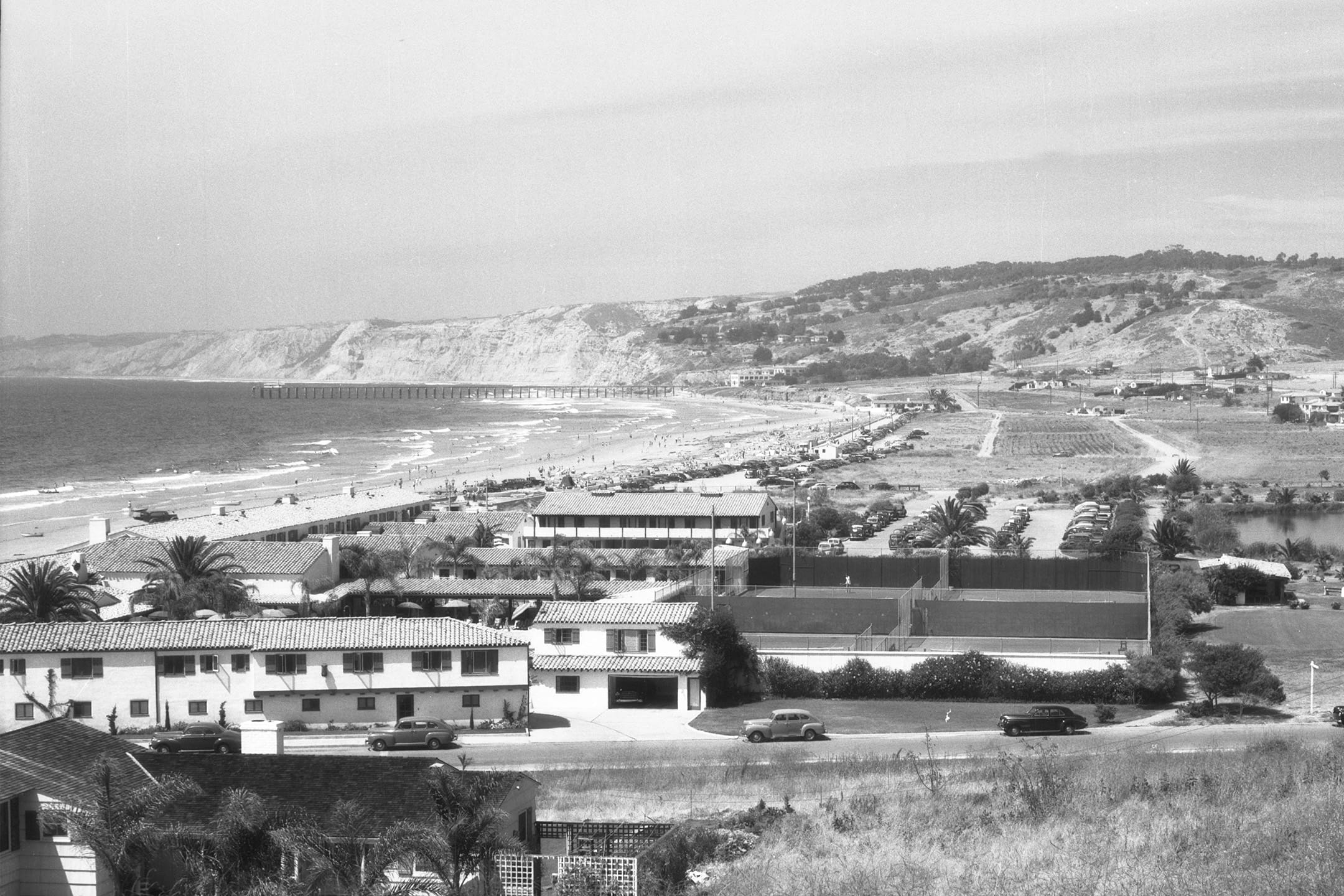
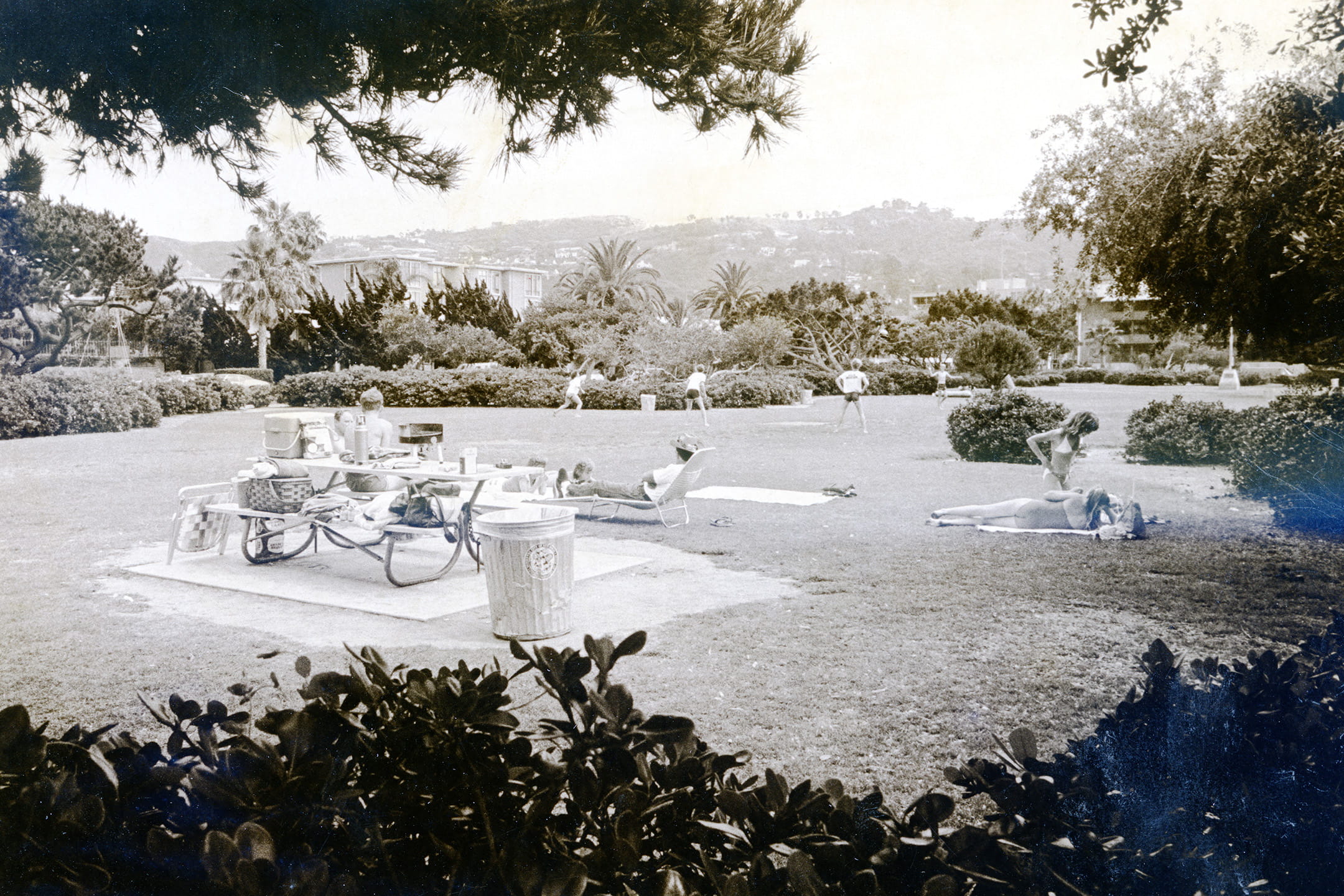
La Jolla Shores, 1946/Image courtesy of San Diego History Center
In 1946, Florence combined some of the Kellogg’s remaining, waterfront Shores lots into one multi-acre parcel, donating the property to the city of San Diego with deed restrictions “to make sure it remains a park in perpetuity,” Bill said.
The restrictions barred commercial development on the donated property and stipulated that plantings must always cover at least 60 percent of the park, according to historian Pat.
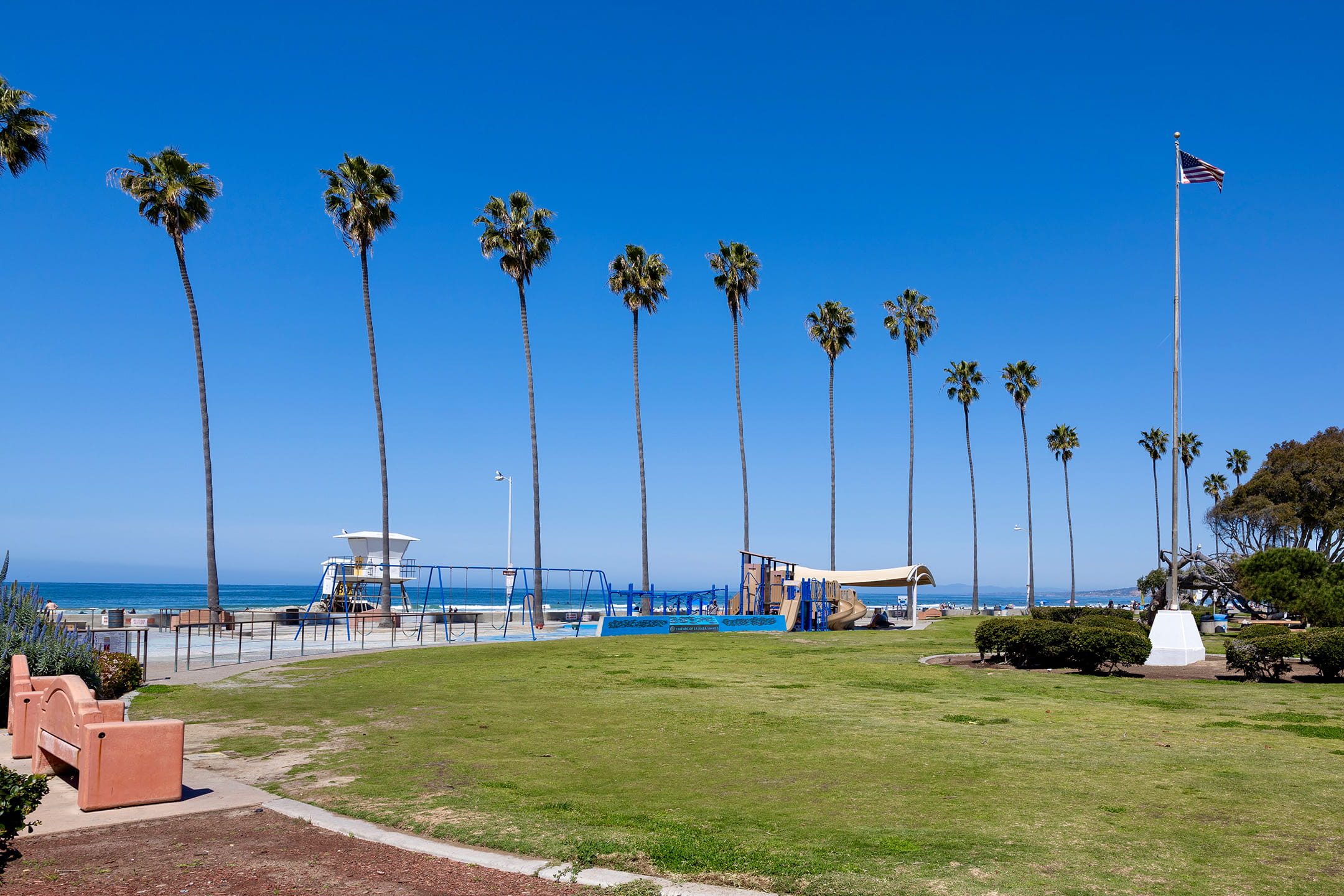
Florence felt “it would be a real tragedy if future development in La Jolla should cause it to lose the splendid worldwide reputation for which it is now justly famous,” Schaelchlin quoted, adding that Florence said “only through careful planning … above all, through constant vigilance on the part of public officials and residents alike, can such a catastrophe be prevented.”
The park was formally dedicated in 1951 and “became truly a community park,” Bill said. “I am very proud of my great-grandfather and great-grandmother for doing what they did.”
Kellogg Park keeps on
The popularity of Kellogg Park continues on, hosting dozens of city-permitted events annually and drawing innumerable people to the shoreline, according to San Diego spokesperson Benny Cartwright.

Kellogg Park is an especially crowded mainstay during the summer and holidays, but remains busy year-round as a top entertainment spot in La Jolla for kids, community events, educational trainings and more.
The Walter Munk Foundation recently proposed a public art project, inviting the public to “adopt” one of about 1,000 interlocking fish tiles originally designed by the late graphic artist MC Escher.
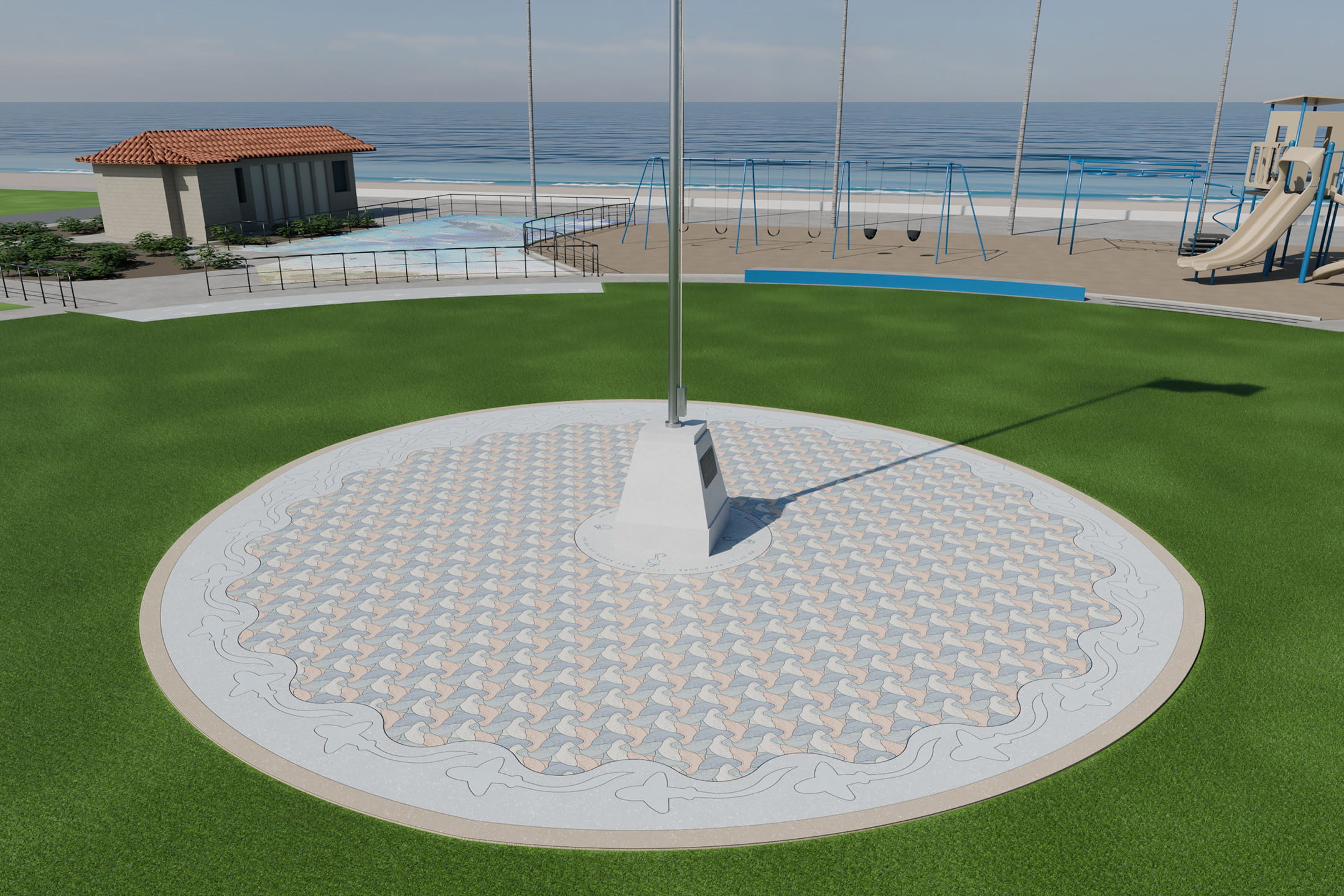
Rendering courtesy of The Walter Munk Foundation
The 15-inch fish tiles will tessellate to encircle the flagpole at the southern end of Kellogg Park; the installation, developed in partnership with the MC Escher Foundation and approved locally and at the city level, will also contain leopard sharks and seahorses and function as a sundial.
The project is one more way the community continues to honor Florence Scripps Kellogg’s gift; other efforts include fundraising for repairs and maintenance and speaking up to ensure the park is protected from the elements into the future.