lajolla.ca spent an afternoon with a Northern Division patrol officer in the La Jolla beat to learn where officers’ attention goes.
A police patrol officer’s shift is unpredictable and depends greatly on the officer’s ability to field information quickly and swivel focus moment to moment to carry out the San Diego Police Department’s mission to maintain public safety with the highest quality police services, as lajolla.ca learned during a ride along Oct 27.
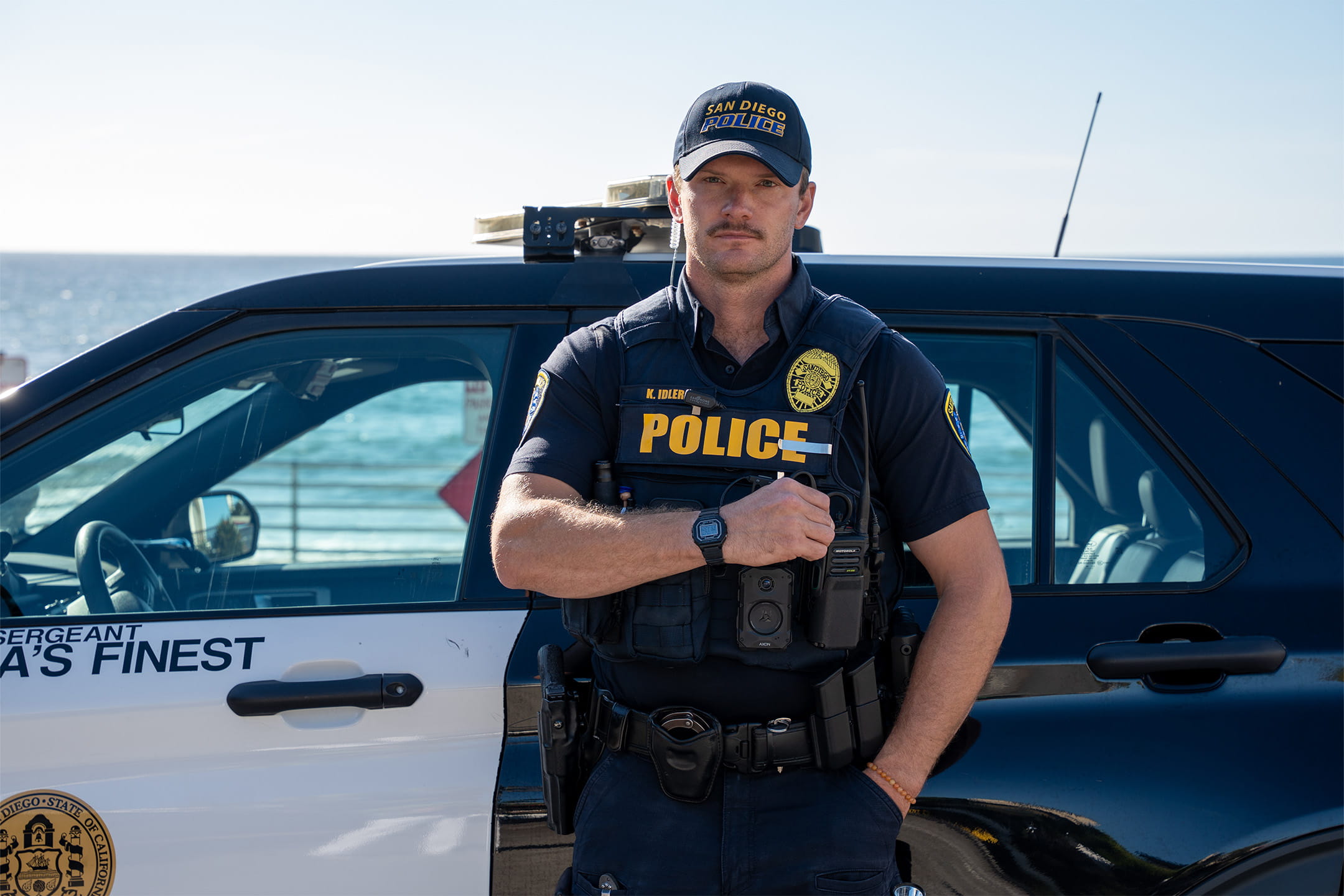
On this particular Tuesday afternoon, lajolla.ca joined Officer Kohl Idler on part of his 10-hour shift. Officers work four 10-hour shifts every week. Shifts run from 6 am to 4 pm; 2 pm to midnight; and 9 pm to 7 am.
Idler and the rest of his shift mates begin their day at the Northern Division substation on Eastgate Mall; Northern is one of nine patrol divisions throughout SDPD. Inside the Northern Division substation are detectives, officers, command and support staff members; the front desk is closed due to budget cutbacks.

Each shift begins with a “lineup,” which isn’t the glass-divided suspect identification attempt from TV shows but where all those on shift gather around the substation’s large conference table for a department-wide update.
The Watch Commander runs through whether there are special events, large incidents or protests occurring throughout the city; Sgt Kyle Olson at Northern then designates the shift officers’ patrol beats and partners, if any.
Lt John White gives his own updates. On Oct 27, White warned of coastal flooding anticipated in Pacific Beach and near Sea World Drive and that officers should prepare to close roads and erect signage.
“Be safe,” Olson said to end the meeting and send officers on their patrols.
Idler exited the building to his vehicle for the day, noting 80% of SDPD’s fleet is used 100% of the time and praising the SDPD auto maintenance crews for keeping three patrol watches going citywide.
SDPD’s mechanics “work relentlessly and are as understaffed as we are,” Idler said.

Each marked patrol vehicle is equipped with lights, sirens and equipment that might be needed during an officer’s shift; the backseat of most is a hard, plastic bench with a special seatbelt for detainees. A sergeant’s vehicle – which lajolla.ca rode in to accommodate more passengers – has a regular backseat and lacks the protective divider between front and rear seats.

Before getting into his vehicle for the day, Idler dons his load bearing vest, which officers are authorized to wear in addition to the standard police belt to carry the tools necessary while on duty.
Idler’s vest holds handcuffs, a pouch for his notebook (and stickers for children), his radio, pens and a body-worn camera, which he activates during pending enforcement action.
Attention in abundance
Being a patrol officer is an exercise in multitasking. While in the car, Idler is following his phone’s directions to a location, checking the computer for emergency calls, listening and responding to the dispatch radio, driving in traffic and at times flipping on lights and sirens.

Officers are given a lot of training for such a detail-laden attention split, Idler said, building up the officers’ efficiency and ensuring proficiency at that kind of processing.
Also commanding an officer’s attention is which calls need a response and when, a constant task requiring immense skill while on patrol.
The officer’s computer lists calls awaiting police attention; each call details the reporting party’s information, incident address and description, along with historical information that helps officers determine how to proceed.

During the Oct 27 ride along, Idler is scanning for high priority calls only, as a lockdown at the Islamic Center of San Diego diverted much of Northern Division’s personnel for several hours and Idler needed to stay free in case a new, urgent call came through.
That afternoon, Idler chose to respond to a few awaiting calls via telephone, a decision that saved driving time and other resources but allowed him to resolve calls that didn’t warrant police presence.

A patrol officer has to be “diligent about what circumstances you put yourself into,” Idler said. “You gotta be very in touch with your abilities. … Don’t bite off more than you can chew.”
Officers are often able to call reporting parties to enhance efficiency and gather information, White said.
Even when there isn’t a large incident requiring more of the division’s focus, officers can’t get to all calls quickly, however.
“We’d need a thousand more officers to sufficiently answer radio calls,” White said.
“What we have is not enough,” Idler said.
And when there aren’t calls waiting, patrol officers use the time for proactive policing, which includes connecting homeless people to resources, conducting traffic enforcement, towing abandoned vehicles and walking the community to greet residents and visitors.
It’s a constant exercise in judgment, time management, priority assessment and sharp responsiveness extended across a 10-hour shift.
Down … and out again
The variability of each shift is part of what Idler loves about his job, as some days are nonstop call-to-call action while others weave between hectic and quiet periods.
“No day is the same,” he said.

During the four-plus hours of the ride along, in addition to resolving calls and attending the lineup, Idler patrolled from La Jolla Shores into Pacific Beach and back again, pulled over and educated a golf cart driver about a missing license plate, stopped for food and to greet a toddler with a sticker and other pedestrians and made his way to a Northern Division “storefront.”
The storefronts are a few unassuming locations throughout the division at which officers can complete field reports and eat instead of returning to the substation, White said.
That seeming downtime, however, is often truncated quickly if a priority call comes through, with both Idler and White reported times food has been abandoned or thrown out a window as officers go “code” (lights and sirens) to the emergency.
On Oct 27, Idler’s food was barely finished when a call came through for a possible injury collision in Mission Bay. Reports suspended, the ride along continued south of La Jolla, where other officers convened at the collision site, handled the collision reports and communicated with witnesses and ambulance crews.
“You see just how quickly a day can shift,” White said, noting officers can extend their time on duty by hours if needed.
“Officers are here for the citizens,” he said. “We try to get to every call as quickly as we can.”