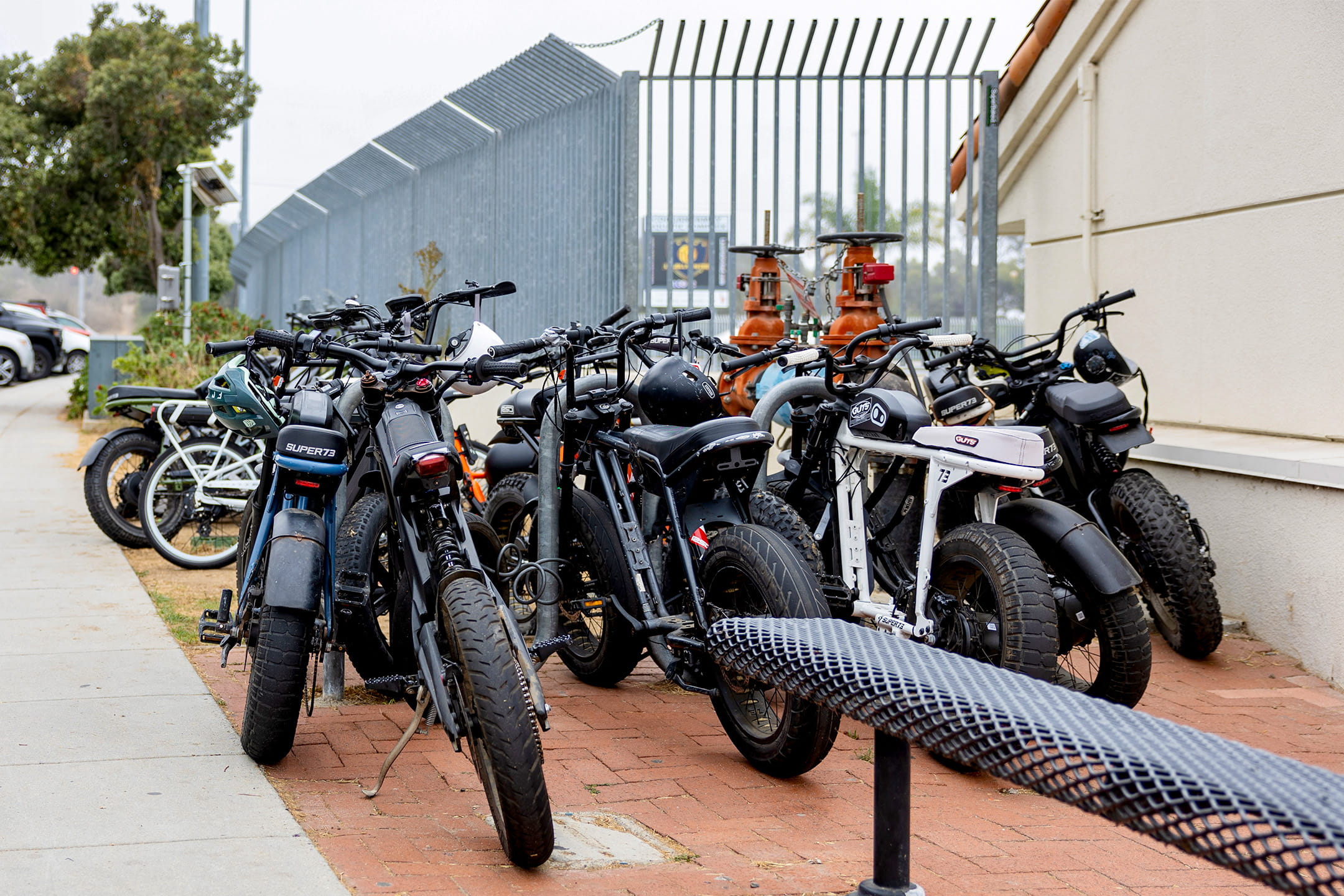
The new statewide analysis shows a sharp spike in injury severity among e-bike riders, especially children, from 2018 to 2024.
A recent study from UC San Diego researchers reveals an exponential increase in e-bike injuries across California, rising from two collisions reported in 2018 to 1,506 in 2024.
The study, published July 17, also found injuries sustained while riding e-bikes were more likely to be moderate-to-severe than those sustained on traditional bicycles, and that children were among the most injured group.
“One of our most concerning findings was the disproportionately high number of injured children involved in e-bike crashes,” John Austin, MD, general surgery resident and research fellow at UCSD School of Medicine and first author of the study, said in a press release.
“E-bikes provide valuable transportation and recreational benefits, but their higher speeds can generate crash forces more comparable to motorcycles than traditional bicycles, leading to potentially severe injuries.”
E-bike popularity is on the rise as riders can travel farther and faster assisted by motors, though critics are concerned about immature riders’ inability to handle the speeds and increased safety challenges.
The study analyzed data from the California Highway Patrol’s Statewide Integrated Traffic Records System, examining collisions involving e-bikes and traditional bicycles from 2018 through 2024. The analysis included 4,035 e-bike collisions and 58,332 traditional bicycle collisions, making it one of the largest statewide studies of e-bike injuries conducted to date.
In addition to the number of collisions and younger ages of those involved in e-bike collisions, researchers found that while overall mortality rates were similar to those of traditional bikes during the study period, there was a significant increase in e-bike-related deaths in 2024.
Also, e-bike riders were more likely to be involved in violations related to unsafe speeds and improper turns; and e-bike collisions were more likely to occur in more affluent communities than traditional bicycle collisions.
Austin said the study points to the need for more education and safety measures for e-bike riders.
“Families should understand these risks, ensure riders wear properly fitted helmets and provide appropriate supervision and training. Safety education needs to grow as quickly as e-bike adoption and safety is our target for trauma injury prevention and advocacy,” he said.
Future research will focus on a better understanding of the specific injuries riders sustain and which prevention strategies are most effective via an examination of traffic collision data and hospital and trauma records.
“Our goal is not to discourage e-bike use, but to ensure that riders of all ages can use them as safely as possible,” Austin said.