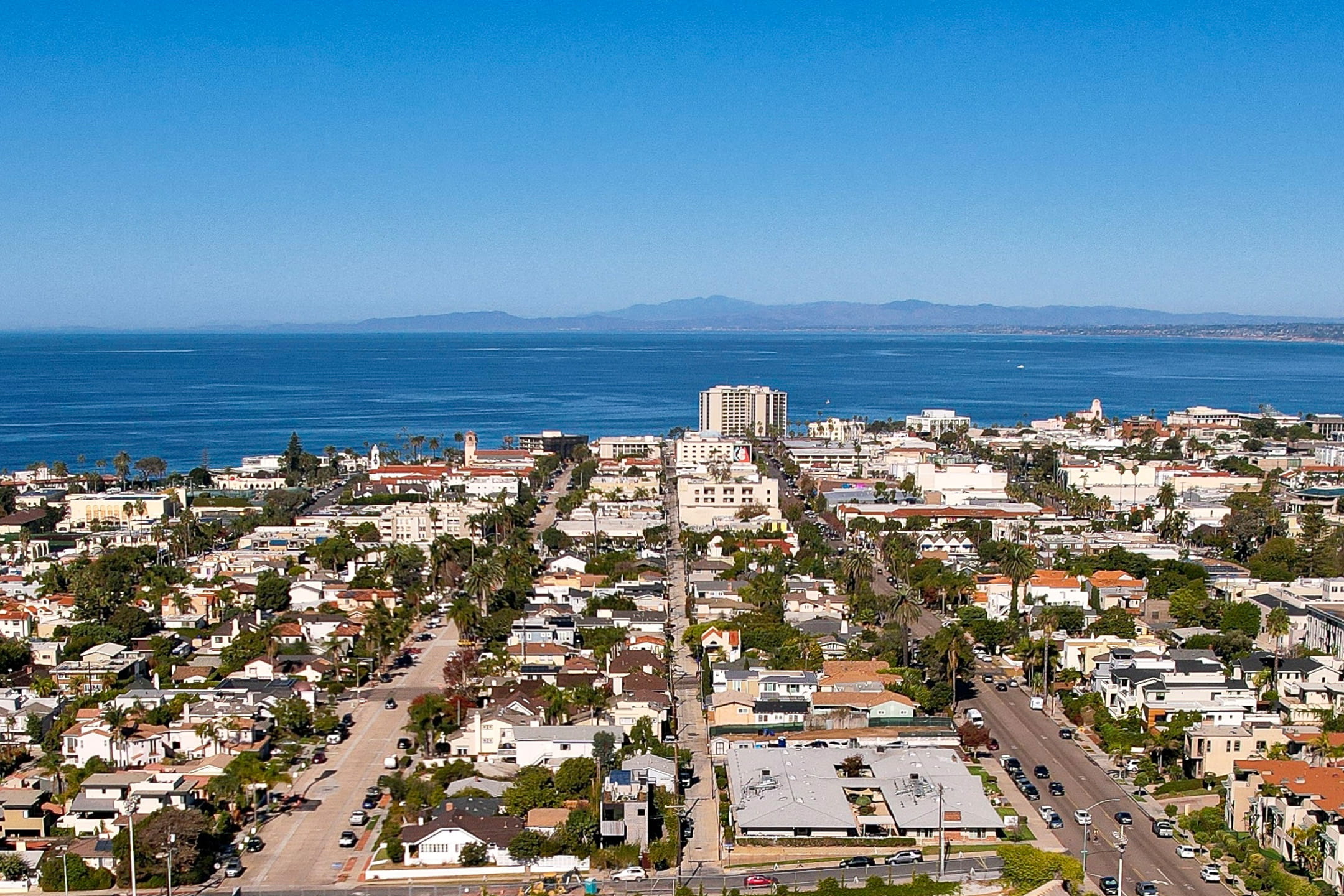
The fifth and final in this lajolla.ca series lays out expert ideas for increasing housing density, considering concerns.
Welcome to the final installment of “In the zone,” a lajolla.ca series that dives into the broad range of topics concerning housing density in La Jolla, with voices including proponents and critics and more.
The city of San Diego – which includes La Jolla – is facing a housing shortage and is attempting to mediate that crisis through the facilitation of projects that add housing density to areas across the city.
These projects persist amid objections and opposition about parking strain, traffic load, loss of community character, cost and more.
As questions arise about how La Jolla might move forward to achieve density and address shortages, those with expertise and experience offer ways to move forward to achieve greater housing density and address concerns.
Planning new development: Form-based codes
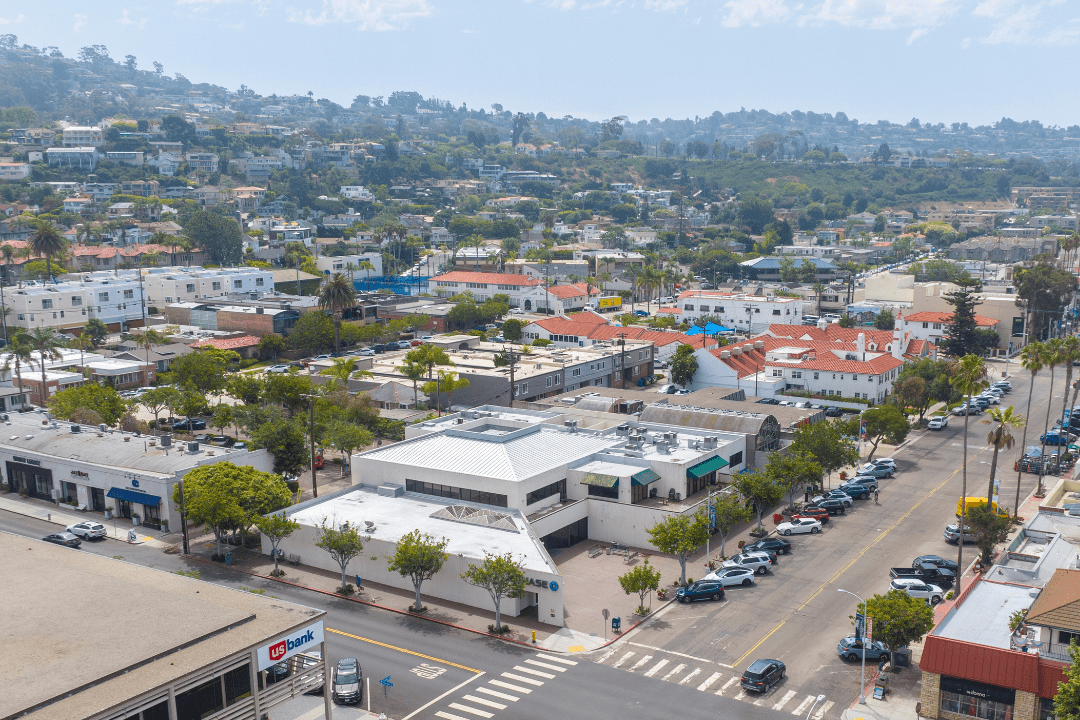
To build up those areas in the La Jolla Community Plan that allow for more density, former La Jolla Community Planning Association President Diane Kane, who has years of experience as a former mayor in Los Angeles County, historian and Caltrans heritage resources coordinator, points to the need for form-based codes.
Form-based codes eschew traditional zoning uses (that focus on what’s inside the building in terms of residential or commercial) and instead concentrate on “the quality of the space between the buildings; the scale, placement and facades,” according to the Center for Zoning Solutions.
Form-based codes also consider public and private open spaces and the streetscapes and could be implemented in places like The Village in La Jolla, near high transit corridors and other places, Kane said.
With this kind of development, “you’re not concerned about use as much as you are the envelope of the building,” she said.
“You get a much better urban format as a result,” Kane said, making “density much more palatable [and] friendlier.”
Using form-based codes is a “thoughtful” way to increase density, she said, attending to space, aesthetics and infrastructure.
“Form-based codes can preserve what residents love about the physical character of their community, ensuring that future development is in harmony with existing context or facilitating varying degrees of change,” the Chicago Metropolitan Agency for Planning states.
Increasing density without new construction

Courtesy of Orli La Jolla
Adding housing density in La Jolla without relying on new construction might be best done through adaptive reuse and the transfer of development rights, Kane said, lowering costs for developers and placing more affordable housing on the market.
Adaptive reuse
“The most affordable housing? It’s in older building stock,” Kane said. “We have done a great job tearing down older building stock to build newer stuff at market rate; they wonder why we have a housing crisis.”
Revitalizing older buildings with new purpose isn’t an entirely new concept, but Kane believes it deserves expansion, even making historically designated structures serviceable.
“You can’t turn everything into a museum,” she said. “It’s got to have some use. And a number of buildings had just outlived their original functions.”
Modifying such structures to meet current codes might “wipe out all the historical fabric,” Kane added; cities and states have added regulations that state a historic property doesn’t have to be brought to code to be useful as long as life safety issues are covered.
The same technique can be used on buildings that are not historic, she said.
Older properties whose original economic purpose has diminished could find new life through legislation like California Assembly Bills 529 (2023) and 2011 (2022), which streamline processes to convert commercial spaces to residential.
This means abandoned strip malls, vacant offices and other redundant spaces could become housing.
Transfer of development rights
A similar method – transfer of development rights (TDR) – makes use of buildings that don’t stretch to the limits of their floor-area ratio (FAR) by allowing landowners to sell (or transfer) unused FAR development rights to developers for housing growth on a different site.
The owner of the site “sending” the development rights to another must enter into a “Preservation, Restoration and Maintenance Agreement” that commits the owner to rehabilitate the original structure and reconstruct it in the event that it is destroyed.
Through TDR and adaptive reuse, Kane said, new construction isn’t necessary and the receiving site can increase density with more flexibility.
The Village of La Jolla: The potential

Incorporating the methods listed above in The Village of La Jolla could mean a targeted zone that “selectively increases density,” Kane said. “It’s interesting stuff.”
On Girard Avenue, one of the widest streets in The Village, buildings could be raised to up to six stories, she said. Buildings on adjacent streets (Fay and Herschel avenues) could be raised but remain lower than those on Girard (maybe four stories); buildings might also be created over the alleys and lanes throughout.
This follows a method of increasing popularity in other city areas to build up “mid-rise” housing, which keeps construction to four- to six-story buildings, with retail and other commercial structures throughout in a walkable area.
Mid-rise housing, advocates say, can be an effective way to address housing shortages humanely, with lower resource costs and benefits to both residents and surrounding businesses.
This approach would mean adjusting Proposition D, a 1972 initiative approved by San Diego voters that restricts new buildings west of Interstate 5 to a 30-foot limit.

Some housing density advocates are in favor of making changes to Prop D, though many are wary of doing so in a way that prevents perceived abuses like a widely-contested project on Turquoise street, one block past the southern border of La Jolla.
“Modernize the 1972 height limit to reflect today’s needs,” former LJCPA President Harry Bubbins said, to maximize housing density.
Building past 30 feet in some Village areas could work, architect and LJCPA President Lisa Kriedeman said.
It’s also important to make use of surface parking lots throughout The Village, Kane said, adding there are also many one- and two-story buildings (indicated in the graphic below) under 30 feet that could be raised.

Courtesy of Diane Kane
“Why isn’t there a push to get these lots developed?” she asked.
“The city could be putting density “where they never looked,” she added. “The Village is perfect. We’ve got a lot of flat plots; many of them have nothing on them [and] several that are underbuilt could go higher.”
The city could also raise property taxes on underdeveloped parcels in The Village to encourage development, Kane said.
Further densifying The Village would also necessitate overhauled traffic management and parking plans, she said, which would focus on changing circulation patterns to reduce the burden on local roads.
Zoning in on solutions

Other ideas for increasing housing density in La Jolla abound, like converting short-term vacation rentals into long-term leases and requiring development impact fees to address infrastructure upgrades.
The profusion of ideas underscores the need for more information and cohesion among stakeholders.
“It can’t be easier to build a four-car garage, second-home mansion than a fourplex for four families,” Bubbins said.
“To move forward, we must take thoughtful, deliberate steps,” he added.
“We do have to look at things rationally, intelligently and honestly, and I don’t think we’re doing that,” preservationist David Goldberg said.
“La Jolla has the vision and resources to lead by example,” Bubbins said, indicating a wider belief that addressing housing density should be multi-faceted and consider construction, reuse and infrastructure for the growth of the community.
To read the previous installments of “In the zone,” click below: