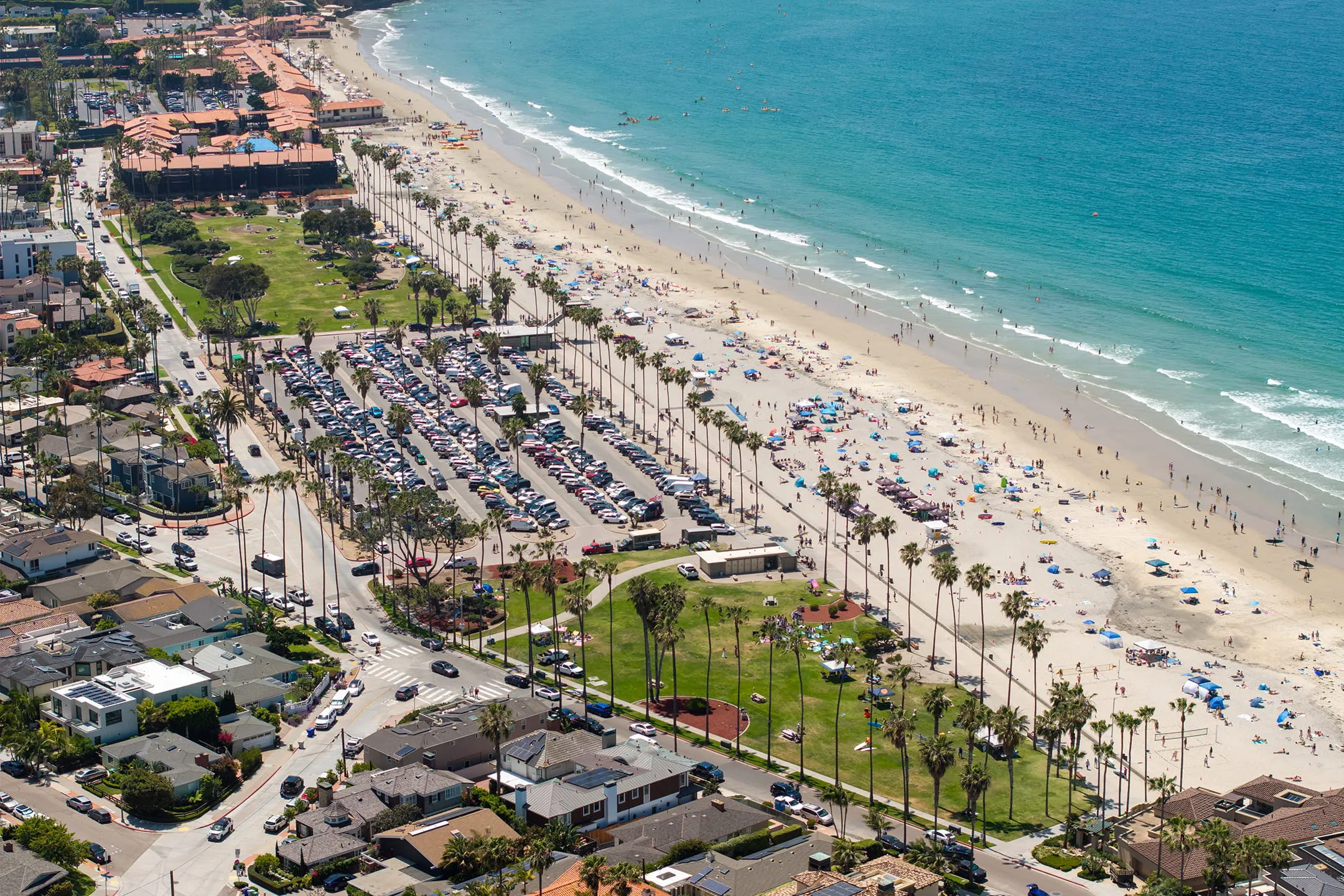
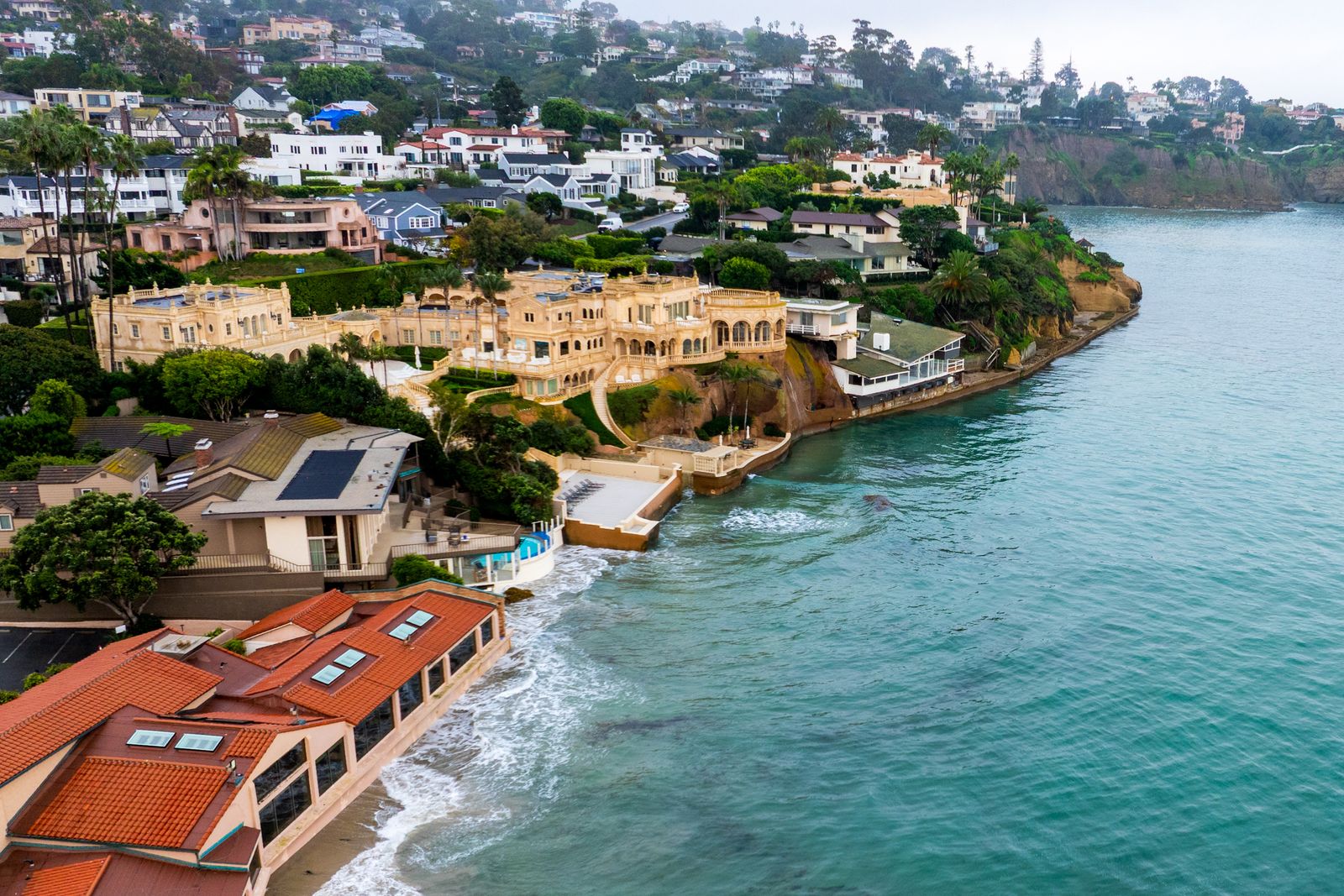
Our essential guide to Ellen Browning Scripps Park, a La Jolla Park with a long history of recreation and reception.
Long before it was a dedicated park space in La Jolla, Ellen Browning Scripps Park has been enchanting visitors and residents with natural beauty and seaside charm.

Named for renowned La Jolla philanthropist Ellen Browning Scripps, the park is as much a local landmark as its namesake.
To walk along the bluffs at Scripps Park is to traverse the same historic paths as people have done for thousands of years, where breathtaking ocean views unfold and the rest of La Jolla spreads into the hills behind you.

Scripps Park, 1955, San Diego History Center
At 5.6 acres, with a 3.8-acre lawn, Scripps Park is a prominent presence in La Jolla Cove. Its seaside sidewalks, belvederes and scattered benches beckon you to the shore; the scattered Monterey cypress trees, jeweled grass and picnic grove provide ample space for relaxation, play and picnics.
A space for community events, private recreation and unforgettable ocean enjoyment from sunrise to sunset, Scripps Park is a cherished La Jolla oasis.

Scripps Park, 1962, San Diego History Center
Below, we immerse you in Ellen Browning Scripps Park’s storied past, from its origins as La Jolla Park through present day and our tips for enjoying this large slice of La Jolla legacy.
Ellen Browning Scripps Park: A subdivision’s start
The park began as part of La Jolla’s first subdivision in 1870. The subdivision, called La Jolla Park, comprised much of what is today the nationally-designated La Jolla Park Coastal Historic District.

“La Jolla Park” was the name for the subdivision as well as the parkland, a 5.6-acre plot just on the bluffs above La Jolla Cove.
The park and The Cove became instant attractions; San Diego hotels hosted regular picnic outings to the park to visit the La Jolla sea caves, with dozens in long-sleeved, hat-accessorized, 19th century garb enjoying the sunny coast.

Scripps Park, 1878, San Diego History Center
These excursions often meant the 100-plus people would take a 14-mile ride through dusty, unpaved roads, but La Jolla Park was “a destination worth the conditions,” as written by historian Pat Schaelchlin in “La Jolla: The Story of a Community.”
It wasn’t long until construction followed, with the installation of a dancing pavilion on the southeast corner of the park (the current corner of Coast Boulevard and Girard Avenue). The dancing pavilion, with inner galleries and a verandah on the ocean side, opened in 1894 with a celebration attended by 500 people, according to Howard Randolph in “La Jolla Year by Year.”
The pavilion “immediately became the social center of The Village,” Randolph wrote, with card games, club meetings and large parties with guest lists including all in La Jolla.
The pavilion was taken down in November 1907, with much of the lumber used in the construction of the Hotel Cabrillo.

La Jolla Cove bathhouse and ‘tent city’ in La Jolla Park, 1897, San Diego History Center
At The Cove end of La Jolla Park, the railroad company erected the first La Jolla bathhouse in 1894, wanting to bring more visitors to the coast, an intensely popular concept that remained in place for decades.
All the while, Ellen Browning Scripps, who moved to La Jolla in 1896, had been slowly efforting much of La Jolla’s development, building her own residence, South Molton Villa, which would become the Museum of Contemporary Art San Diego, and founding The Bishop’s School; The Children’s Pool seawall; the La Jolla Recreational Center; the La Jolla Woman’s Club building; the Scripps Institution of Oceanography, Scripps Memorial Hospital; and Torrey Pines State Natural Reserve; and more.
To honor Scripps’ beneficence, the park board renamed La Jolla Park the Ellen Browning Scripps Park on Oct 18, 1927 – Scripps’ 91st birthday.
Scripps died in 1932, but her eponymous park lives on, being rededicated in 1961 to commemorate her 125th birthday with a plaque installed permanently at the park’s southeast entrance.
What to do at Ellen Browning Scripps Park
Today, La Jolla’s Scripps Park is an open plot of possibilities. The city offers permits for organized use year-round for weddings and other events, though most of the park’s visitors are people simply participating in nature’s bounty.
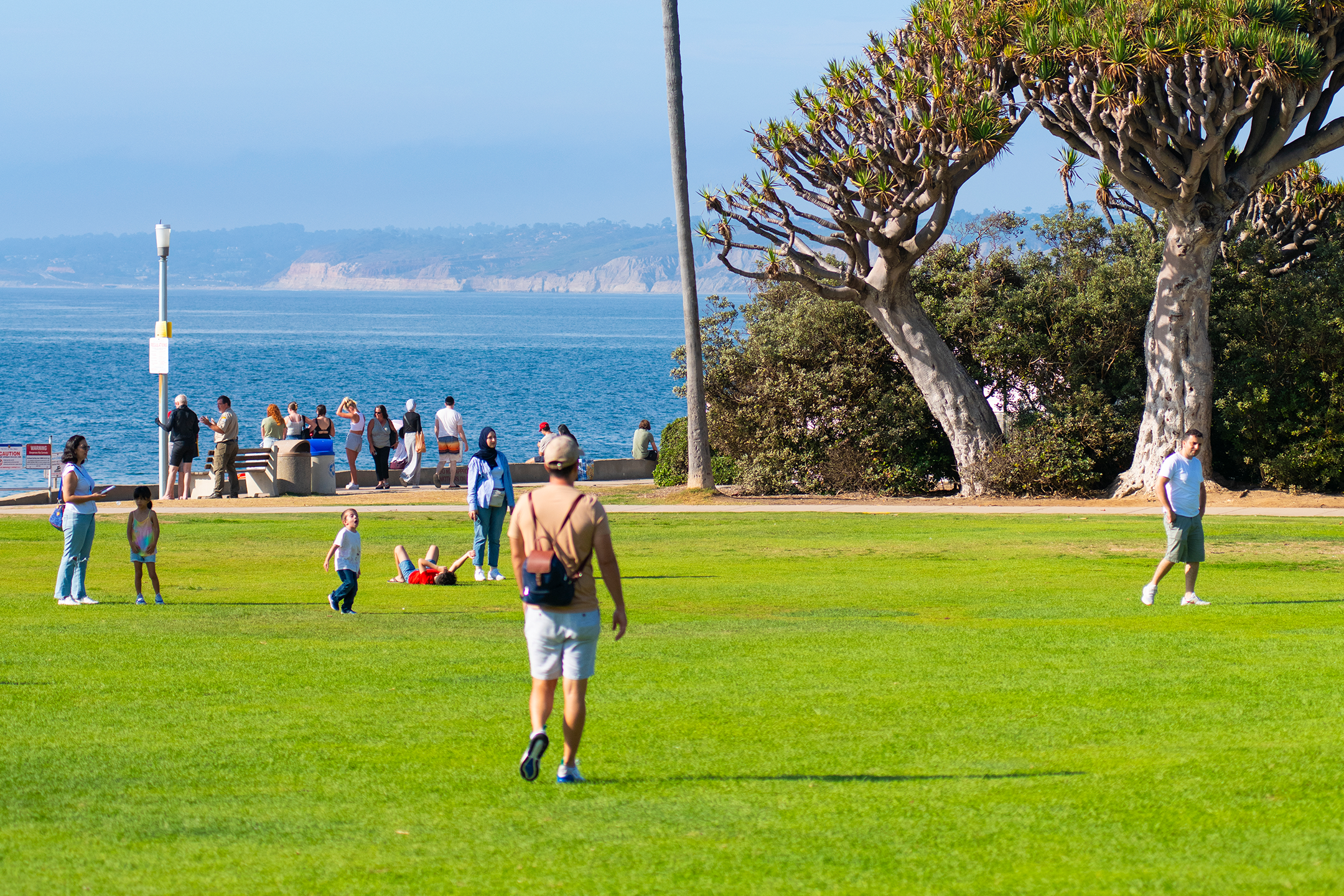
Take a picnic, a blanket and a Frisbee for a do-it-yourself day of leisure. Read a book under the trees, bring a yoga mat for your own seaside stretch session or blow bubbles with the kids. Take in the views from one of the belvederes (the green, house-like structures) along the bluffs to admire the La Jolla Underwater Park from above.
You’ll find this is also a meetup spot for playdates, local scuba lessons or friends gathering to swim La Jolla Cove.
Community organizations also use Scripps Park for various San Diego events, including the annual La Jolla Concours d’Elegance, the Kiwanis Concerts by the Sea and more.
Hotels near Scripps Park
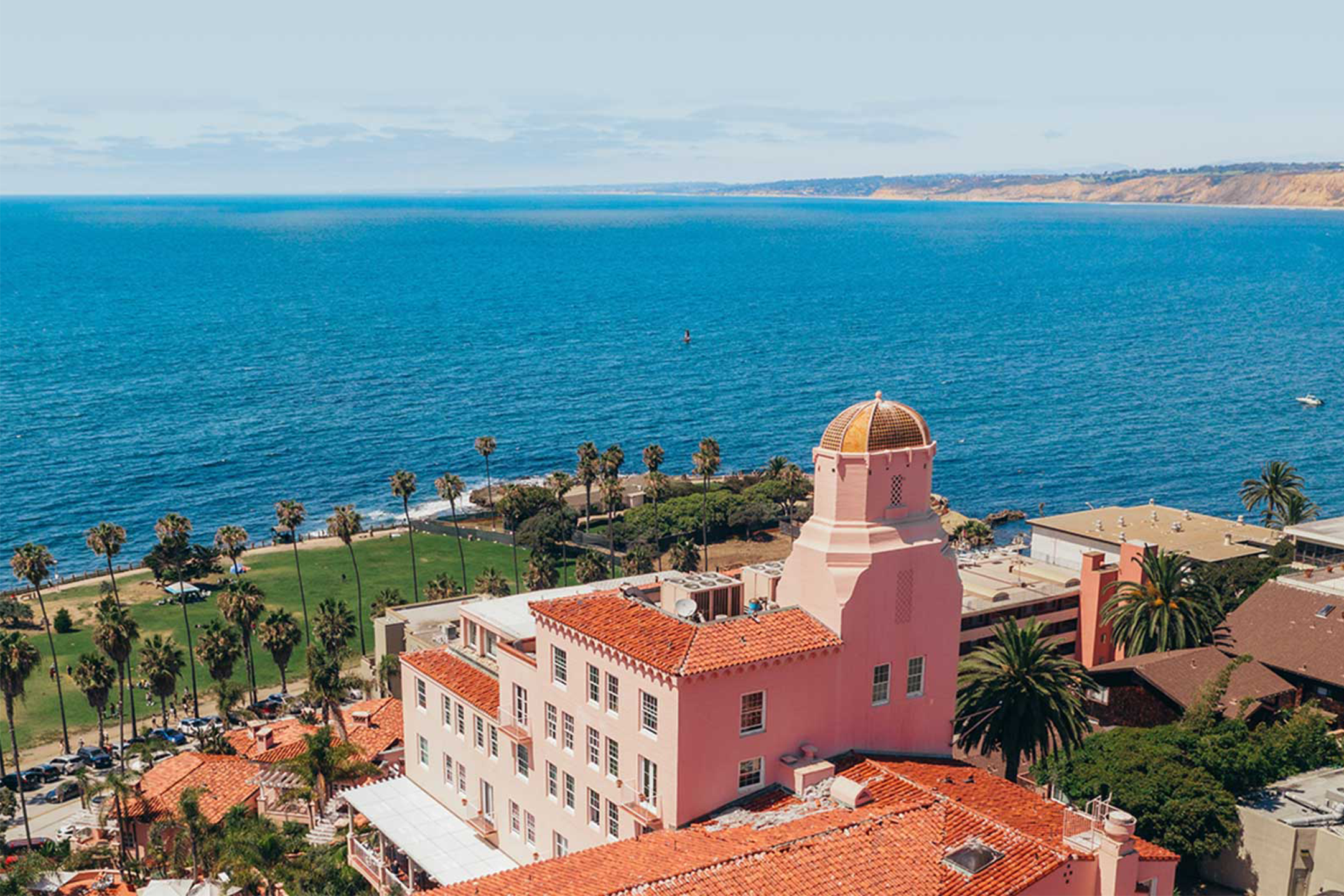
La Valencia Hotel
Looking to stay near La Jolla’s Scripps Park? Several La Jolla hotels offer rooms in proximity: La Jolla Cove Hotel & Suites, La Valencia Hotel, Grande Colonial Hotel, Cormorant Boutique Hotel and Pantai Inn are just a few options.
Restaurants near Scripps Park

Cove House
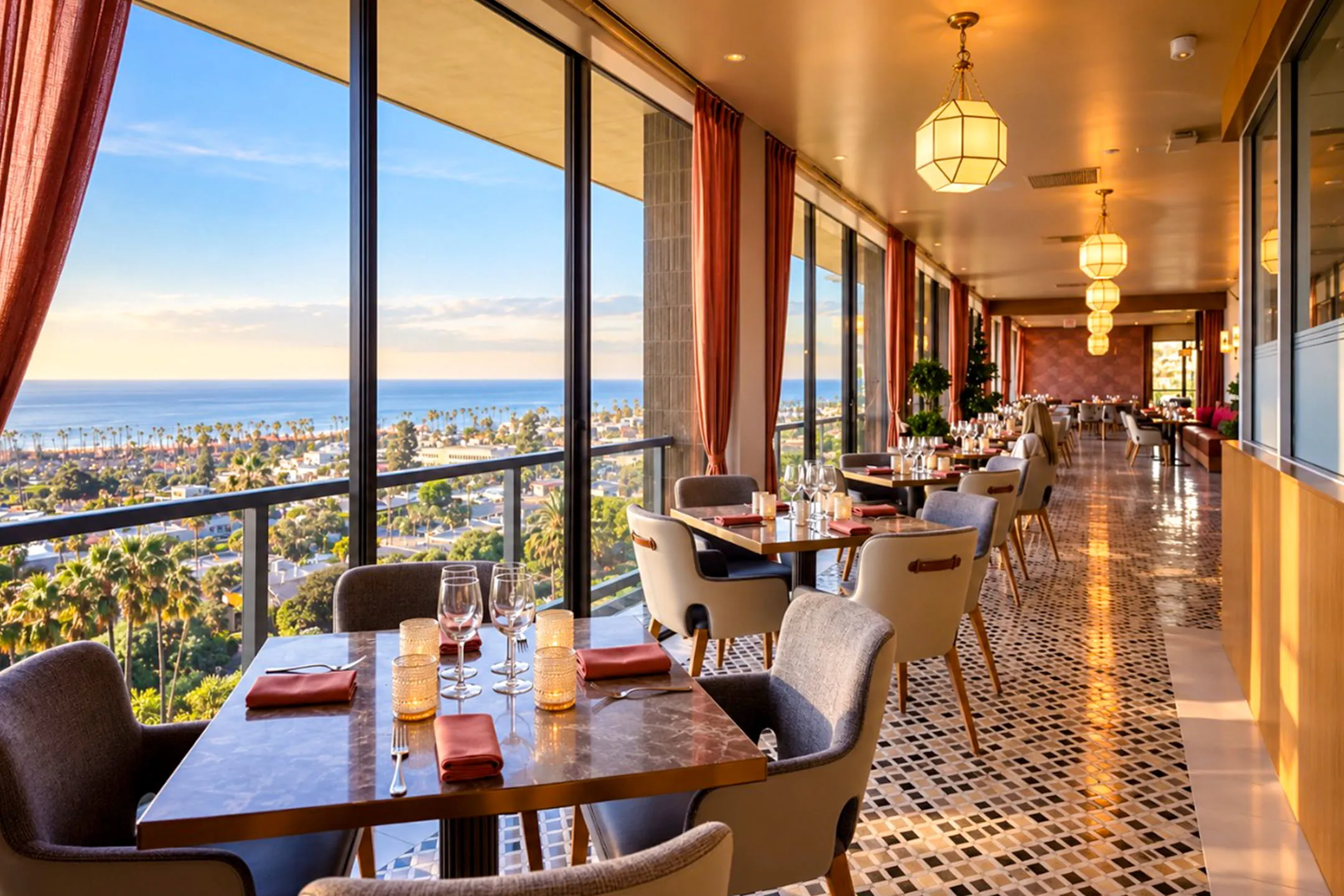
You will find several notable La Jolla restaurants and eateries an easy walking distance from Ellen Browning Scripps Park, including Brockton Villa, Cove House and Cody’s La Jolla.
FAQs about Ellen Browning Scripps Park
Where is Scripps Park?
Scripps Park and La Jolla Cove share an address: 1100 Coast Blvd.
From Interstate 5 south, exit La Jolla Village Drive west and turn left on Torrey Pines Road. Turn right on Prospect Place and then right again onto Cave Street, following the road until it becomes Coast Boulevard. The park is located at the bottom of the hill.
From Interstate 5 north or State Route 52 west, exit at La Jolla Parkway and continue west onto Torrey Pines Road, following the directions above.
Is there parking at Ellen Browning Scripps Park?
Parking at Scripps Park is on the street; La Jolla parking is often difficult, especially in summer, so plan ahead and don’t be surprised if you need to park farther away and walk a bit.
Are there restrooms at Scripps Park?
Scripps Park boasts the Scripps Park Pavilion, a comfort station with showers, toilets and more.
Are dogs allowed at Scripps Park?
Dogs are allowed on leashes at Scripps Park, with certain limitations as written on park signage.