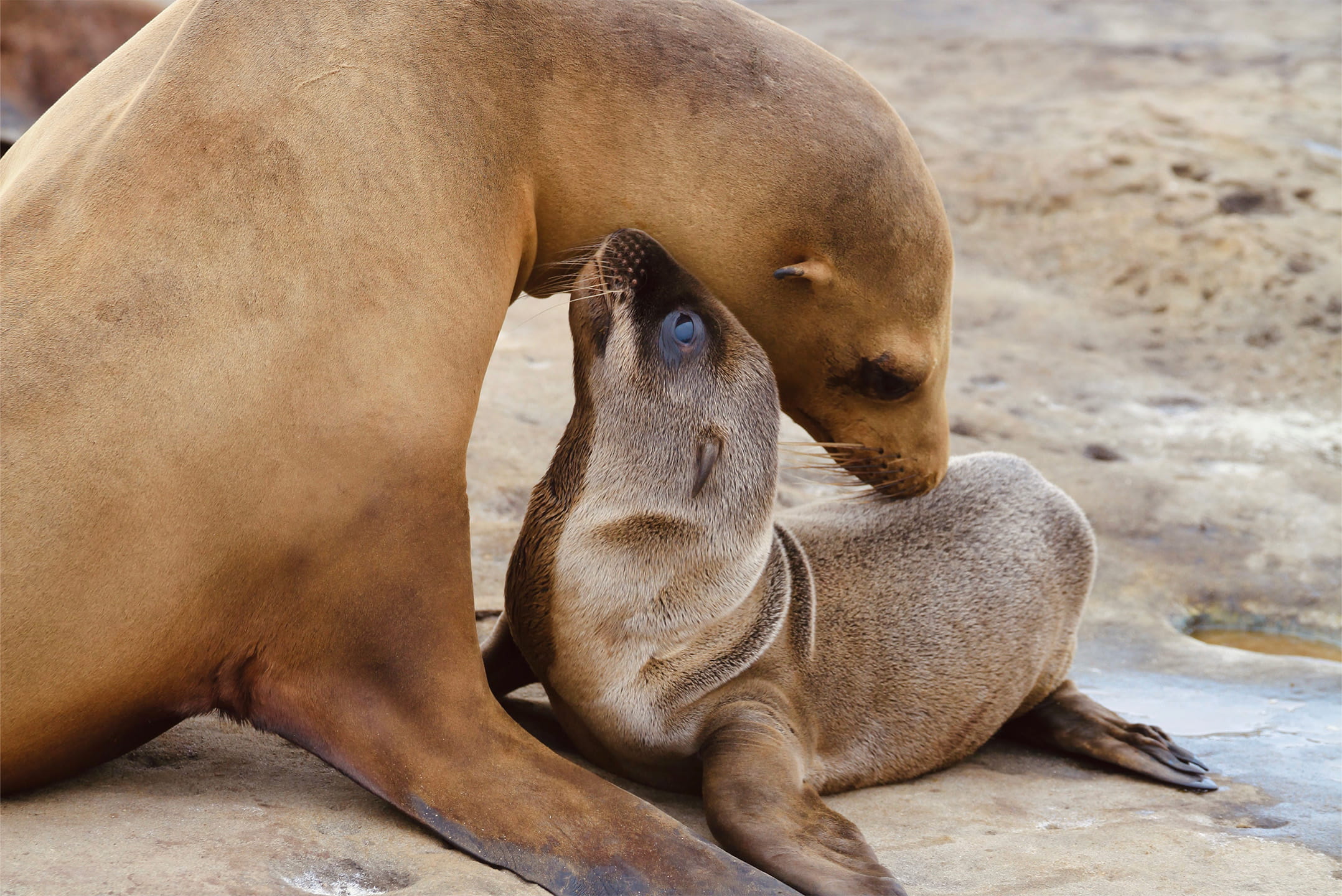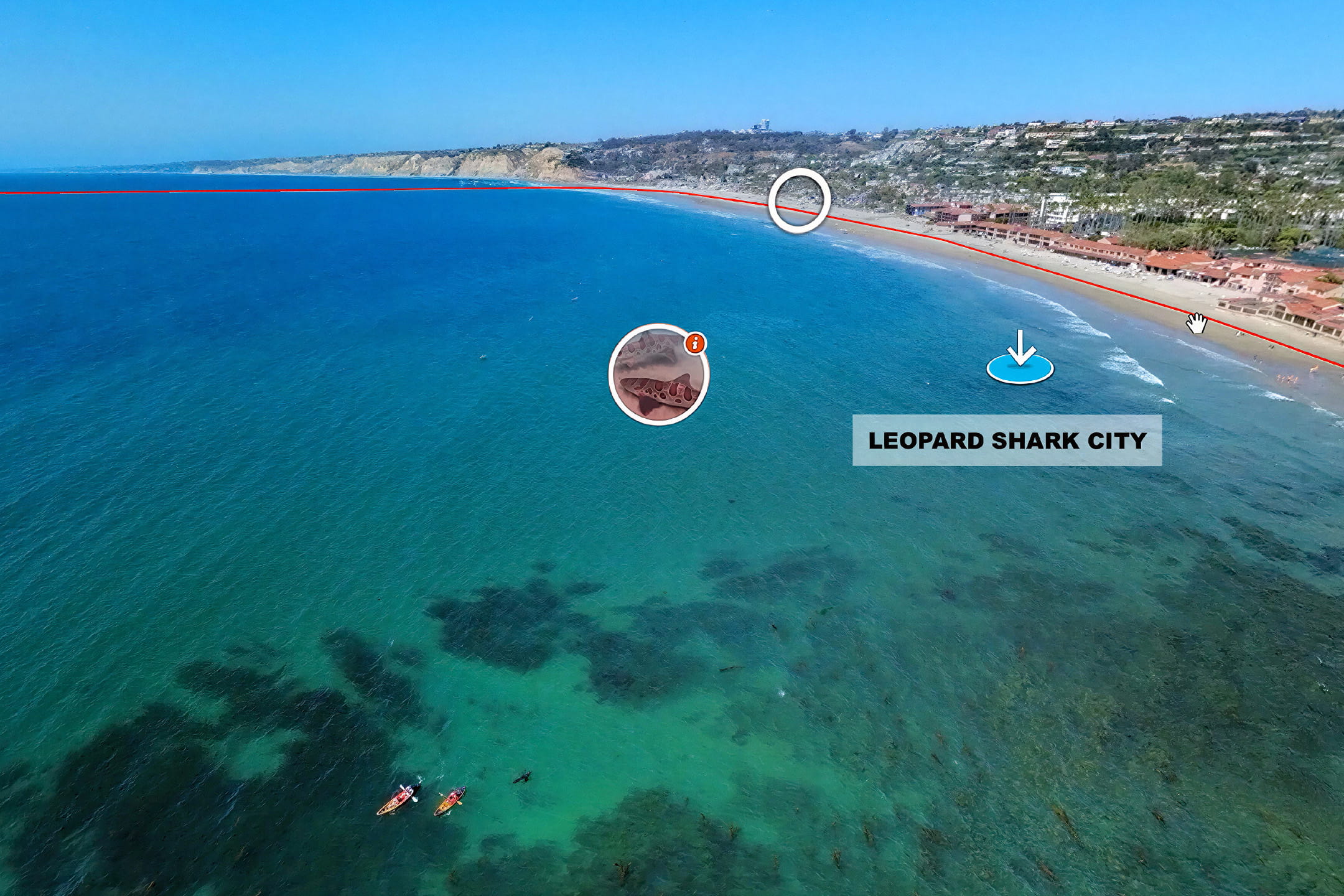
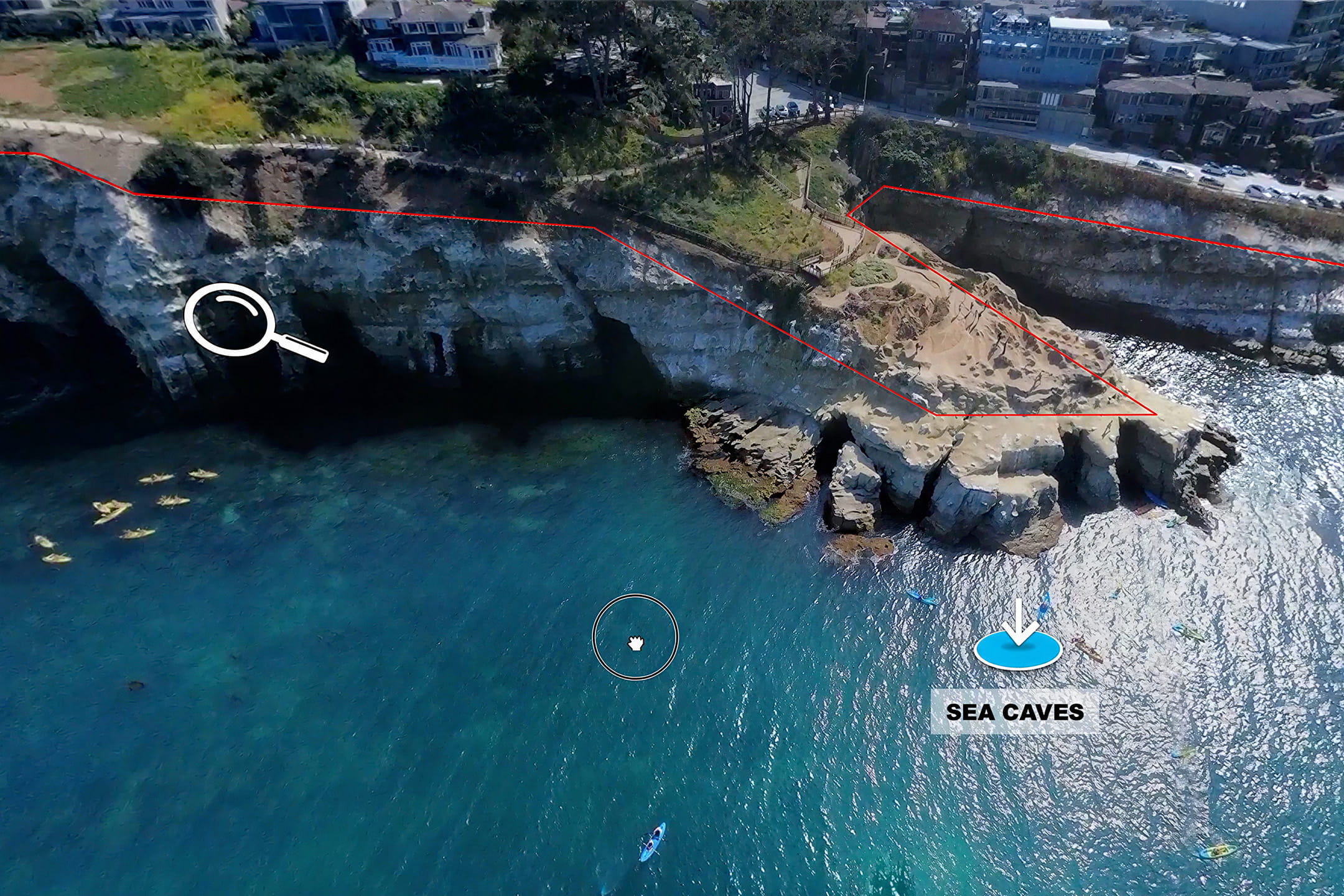
Within the virtual dive tour, participants are invited to learn more about the species and underwater topography and get involved in conservation efforts.
Diving in
Zach Cabading created the website as his capstone project for his newly earned Master of Advanced Studies in Marine Biodiversity and Conservation from Scripps Institution of Oceanography.
Cabading enrolled in the one-year interdisciplinary program, wanting to learn marketing for ocean conservation.
“We take science classes, but there’s also an emphasis on policy, on communications, on different aspects of protecting the ocean that are not necessarily related to … formal research,” Cabading said.
“It’s pretty unique. I don’t think there’s a whole lot of programs in the US that are quite like this one.”
Cabading came to the program without a background in science and without being a lifelong diver.
“I was born and raised in San Diego, … but the ocean was never really important to me,” he said. “I never went to the beach; I never went surfing or paddleboarding or kayaking.”
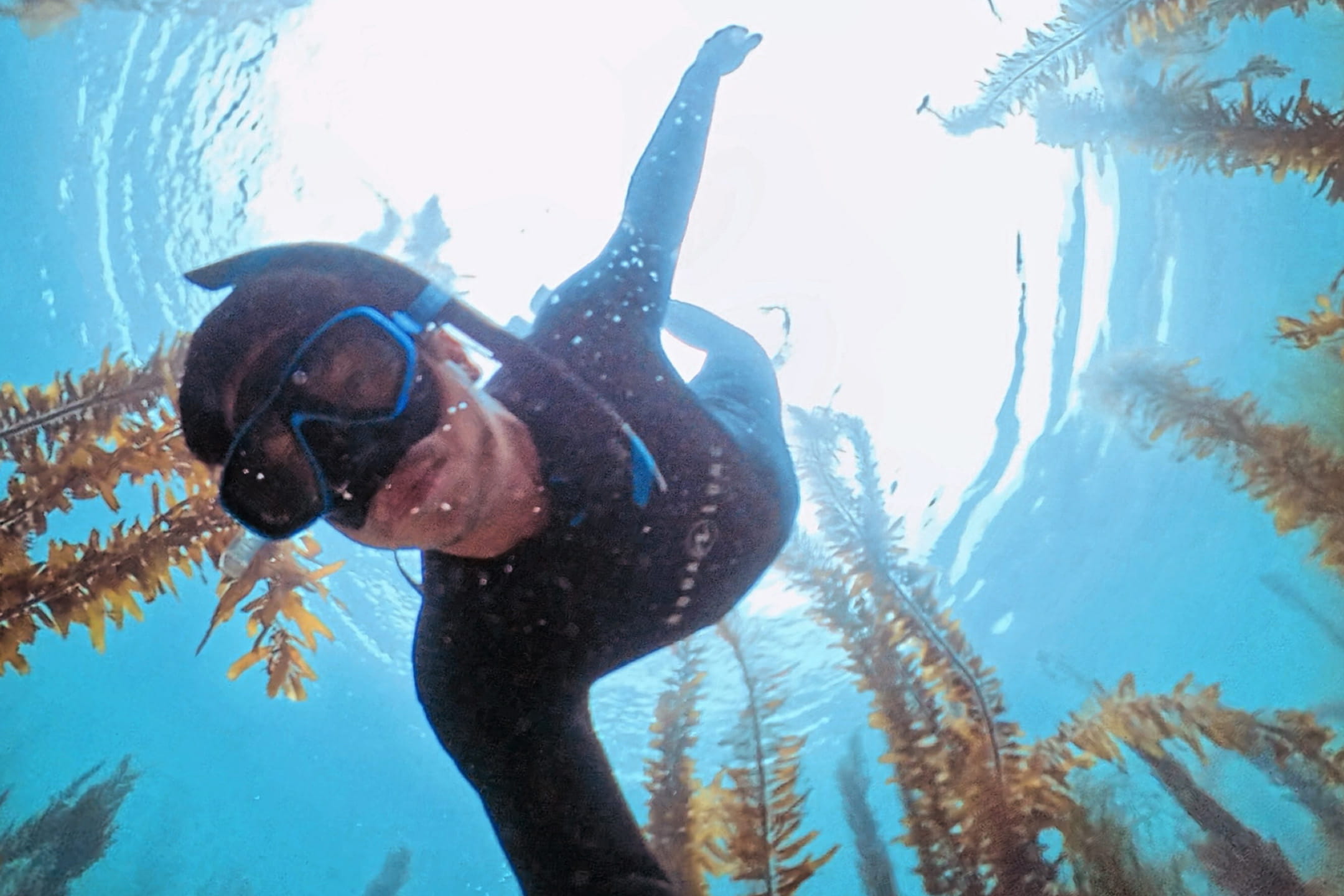
Image courtesy of Zach Cabading
But during the pandemic, Cabading tried diving, becoming certified in 2020.
That new hobby changed Cabading’s perspective on so much more than the ocean as recreation.
“I just couldn’t believe that I had lived in this city for such a long time and had no idea that we have this marine ecosystem here that is so beautiful and colorful and full of life.”
Wondering what else he had missed out on, Cabading, who worked in digital marketing, began to realize he wanted to pursue “cause-driven marketing and connect people with the ocean in some way.”
Diving deeper
The virtual dive tour developed from Cabading’s desire to share his passion for the ocean with friends and family, many of whom questioned whether there was anything worthy to see in the cold Pacific water.
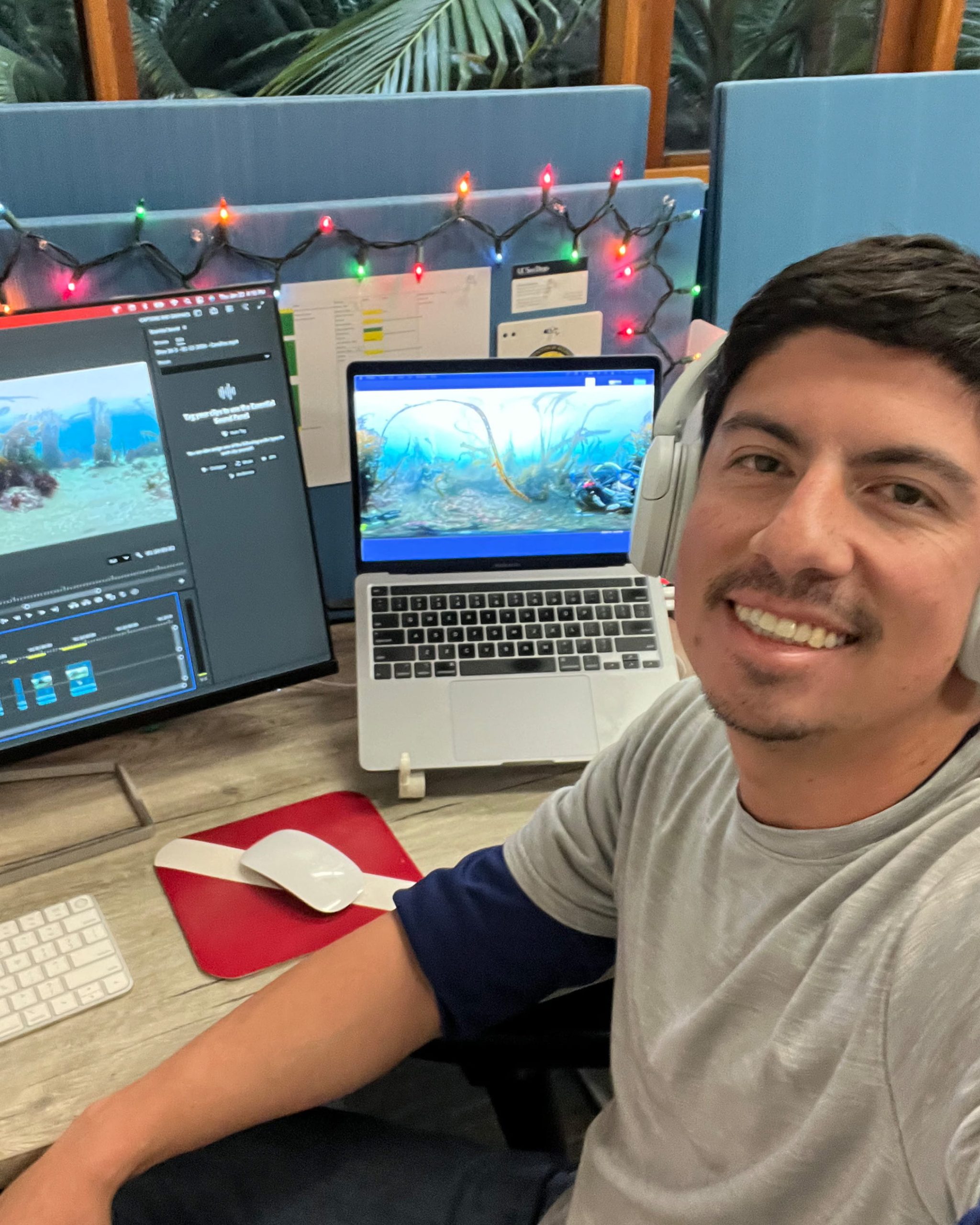
Image courtesy of Zach Cabading
“I loved the kelp forests and the rocky reefs and the seagrass beds,” he said. “I wanted … a project where I could show people just how beautiful our temperate marine ecosystems are.”
That led to his wanting to communicate information about the Marine Protected Areas and their adaptive management process, a statewide initiative to maintain the network of protected ocean and estuarine habitats that limits fishing and other human activities.
Cabading noticed many residents don’t know what MPAs are, how they work or “what needs to be taken into consideration when we’re trying to create a successful MPA.”
The virtual dive tour, then, not only increases visual access to La Jolla’s MPAs but also serves to educate visitors about the science behind MPA management, informing future conservation efforts through illustration and driving curiosity.
“The ocean is so big and so vast and so dynamic,” Cabading said. “An MPA localizes the ocean a little bit and creates a little neighborhood out of the ocean.”
Places with MPAs can feel that area is “an underwater extension of their own community,” he added. “That makes people care about them more and want to protect them more.”
Information through immersion
What simple photography can lack, Cabading said, is a “sense of exploration [and] discovery.”
“It’s one thing to show really beautiful underwater photos or videos, but I think that being able to give options on how you want to navigate the environment, how you want to look at the space that you’re looking at … brings back that sense of freedom and control over how you experience this place.”
The virtual dive incorporates photography with about 21 hours of other underwater footage, leaning heavily on collaborations with SIO researchers and other local experts like Wildcoast, the California Marine Sanctuary Foundation, Reef Check Foundation and more to ensure accurate information.
Going forward, gathering feedback and data on how people are using the virtual dive tour will help Cabading update the site and share it with other organizations looking to engage in similar conservation work.
Those trying to restore a coral reef, for example, can show the underwater area virtually to funders, policymakers and others to communicate progress, he said.
But above all, Cabading hopes the tour will serve as a reminder to San Diegans to never take their watery backyard for granted.
“We’re so lucky to have a Marine Protected Area like this here,” he said, “and we’re lucky to have a community here that really, really cares about protecting the space.
“That’s a really special thing.”
That led to his wanting to communicate information about the Marine Protected Areas and their adaptive management process, a statewide initiative to maintain the network of protected ocean and estuarine habitats that limits fishing and other human activities.
Cabading noticed many residents don’t know what MPAs are, how they work or “what needs to be taken into consideration when we’re trying to create a successful MPA.”
The virtual dive tour, then, not only increases visual access to La Jolla’s MPAs but also serves to educate visitors about the science behind MPA management, informing future conservation efforts through illustration and driving curiosity.
“The ocean is so big and so vast and so dynamic,” Cabading said. “An MPA localizes the ocean a little bit and creates a little neighborhood out of the ocean.”
Places with MPAs can feel that area is “an underwater extension of their own community,” he added. “That makes people care about them more and want to protect them more.”
Information through immersion
What simple photography can lack, Cabading said, is a “sense of exploration [and] discovery.”
“It’s one thing to show really beautiful underwater photos or videos, but I think that being able to give options on how you want to navigate the environment, how you want to look at the space that you’re looking at … brings back that sense of freedom and control over how you experience this place.”
The virtual dive incorporates photography with about 21 hours of other underwater footage, leaning heavily on collaborations with SIO researchers and other local experts like Wildcoast, the California Marine Sanctuary Foundation, Reef Check Foundation and more to ensure accurate information.
Going forward, gathering feedback and data on how people are using the virtual dive tour will help Cabading update the site and share it with other organizations looking to engage in similar conservation work.
Those trying to restore a coral reef, for example, can show the underwater area virtually to funders, policymakers and others to communicate progress, he said.
But above all, Cabading hopes the tour will serve as a reminder to San Diegans to never take their watery backyard for granted.
“We’re so lucky to have a Marine Protected Area like this here,” he said, “and we’re lucky to have a community here that really, really cares about protecting the space.
“That’s a really special thing.”